Stop gambling.
Start playing poker.

Most poker tools train decisions. This one trains the skill that makes better decisions possible.

Narrowing a range under pressure is the hardest skill in poker, and reading about it won't build it. Here you get the volume, hand after hand against six real player types, with every read checked against what they really held.

Free during the beta. Runs in your browser on a computer or your phone, with every hand synced.

Reps, Not Reading

You can read about narrowing ranges all day. The skill only grows with volume, and with finding out every time how close you were.

Read After Read

Every hand asks for a read after each of their actions, so a short session is dozens of reads.

Checked Every Time

The villain plays by known rules, so each read is compared with their exact range, never a guess.

Under the Clock

Grinder and Pro put a shot clock on every read, the way the table does.

How It Works

Each hand is a real spot. You're dealt in, they act, and you work out what they can still have before you act yourself.

Pick a Villain

A nit, a solid regular, a calling station, a maniac and more, each modeled on how those players really play.

Read Their Range

After each of their actions, paint their range on the grid, or pick what it's mostly made of, depending on your level.

See the Truth

Exactly which hands they have, which you missed, which they'd never have, and what their last action took out.

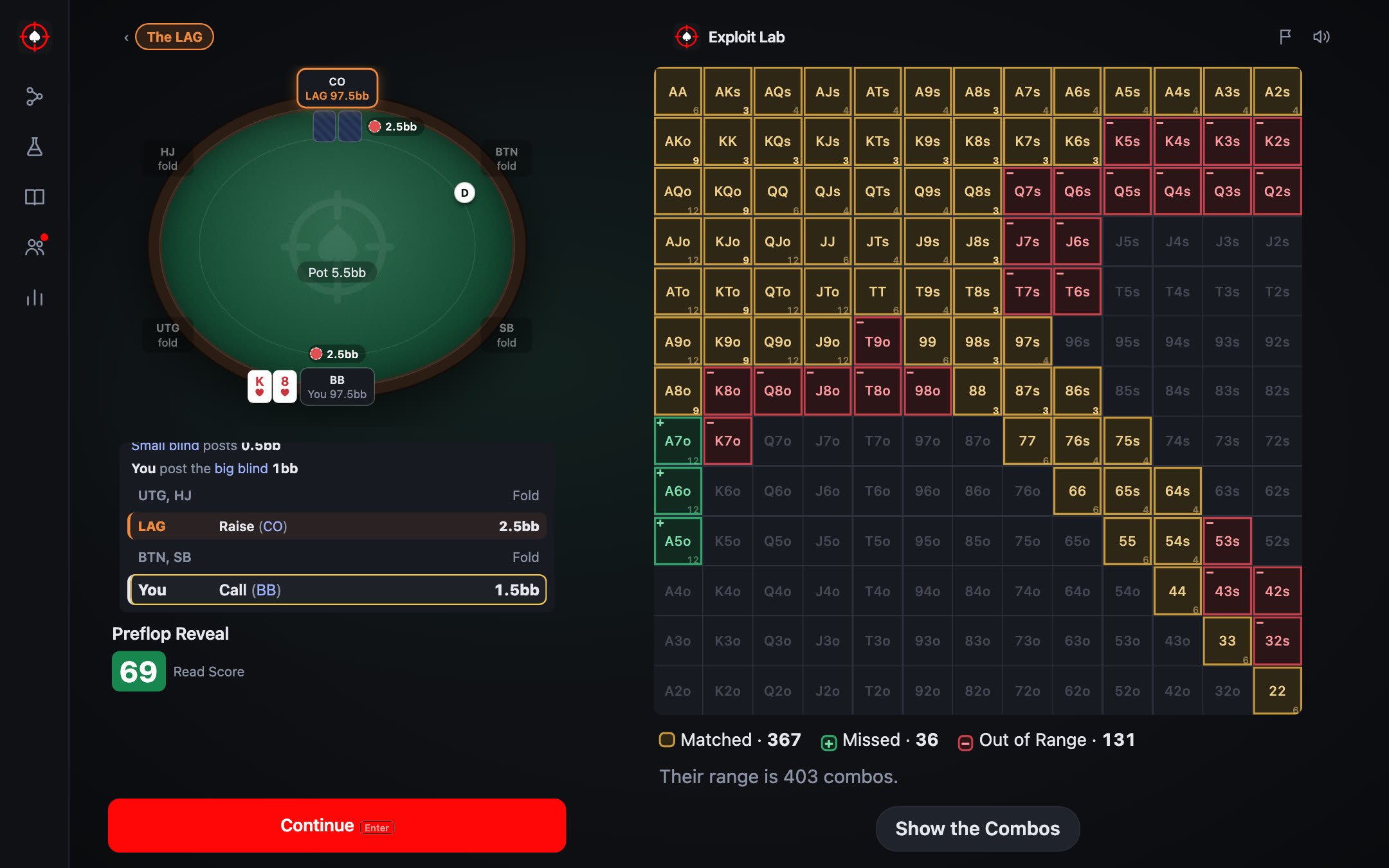
The preflop reveal on a laptop: the LAG opens 403 combos from the cutoff. Hands in both reads are amber, the ones you left out green, the ones you added red, with a read score of 69.

Graded on Exploits, Not Just a Range

A solid range keeps you honest, and when the numbers prove a deviation beats this villain, you get credit for finding it.

Calls and Folds by the Math

Your equity against their true range decides it.

Proven Steals

Open a hand your range folds when this villain folds often enough to make it pay.

River Bluffs That Pay

How often they fold against how often you need them to.

Wide or Thin

Each exploit says whether it would pay against a slightly different player.

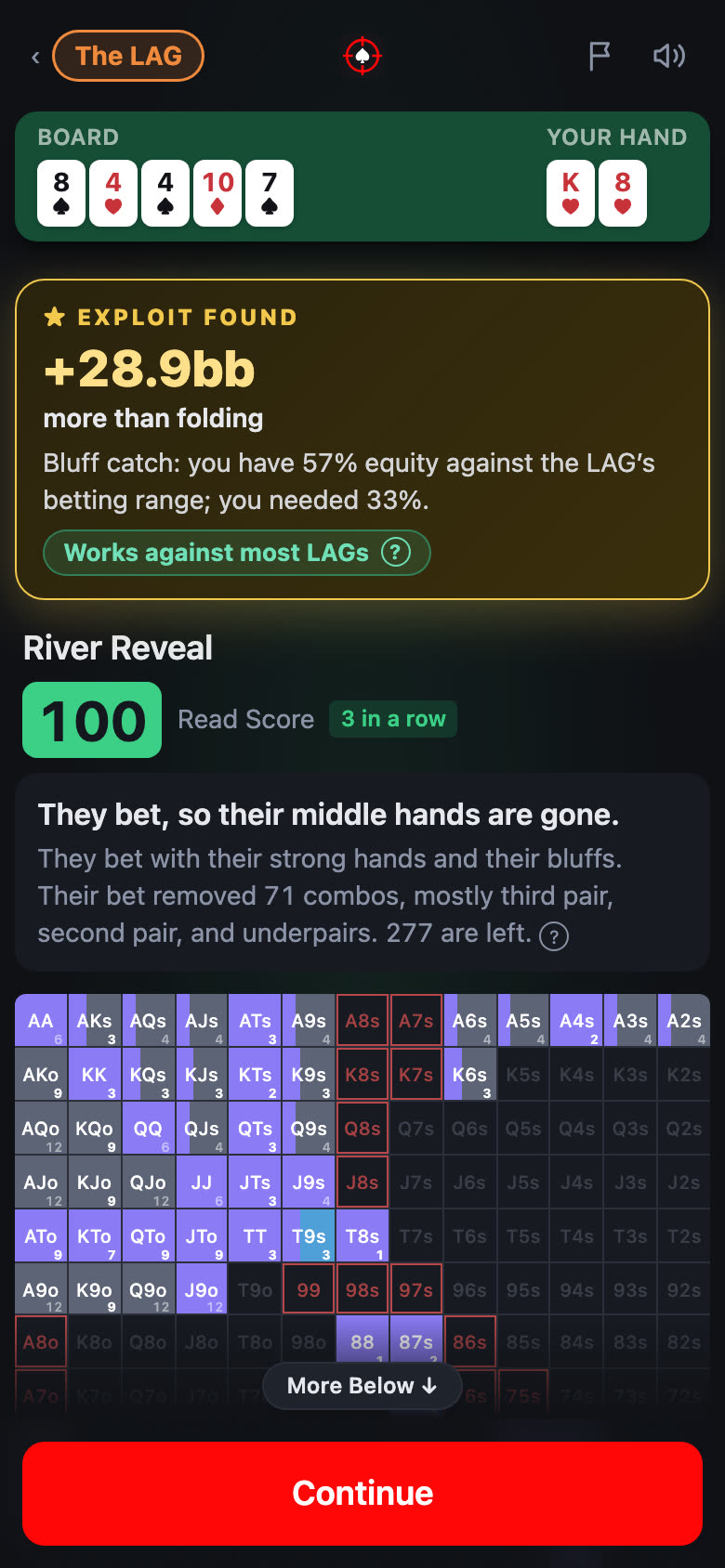
The river reveal of the same hand on a phone, under an Exploit Found card: +28.9bb more than folding. Bluff catch: you have 57% equity against the LAG's betting range and needed 33%, and it works against most LAGs. Read score 100.

A Guided Path Through Every Villain's Biggest Leaks

You never have to wonder what to study next. Each villain gets six lessons on the spots where they give away the most, then a Final Test.

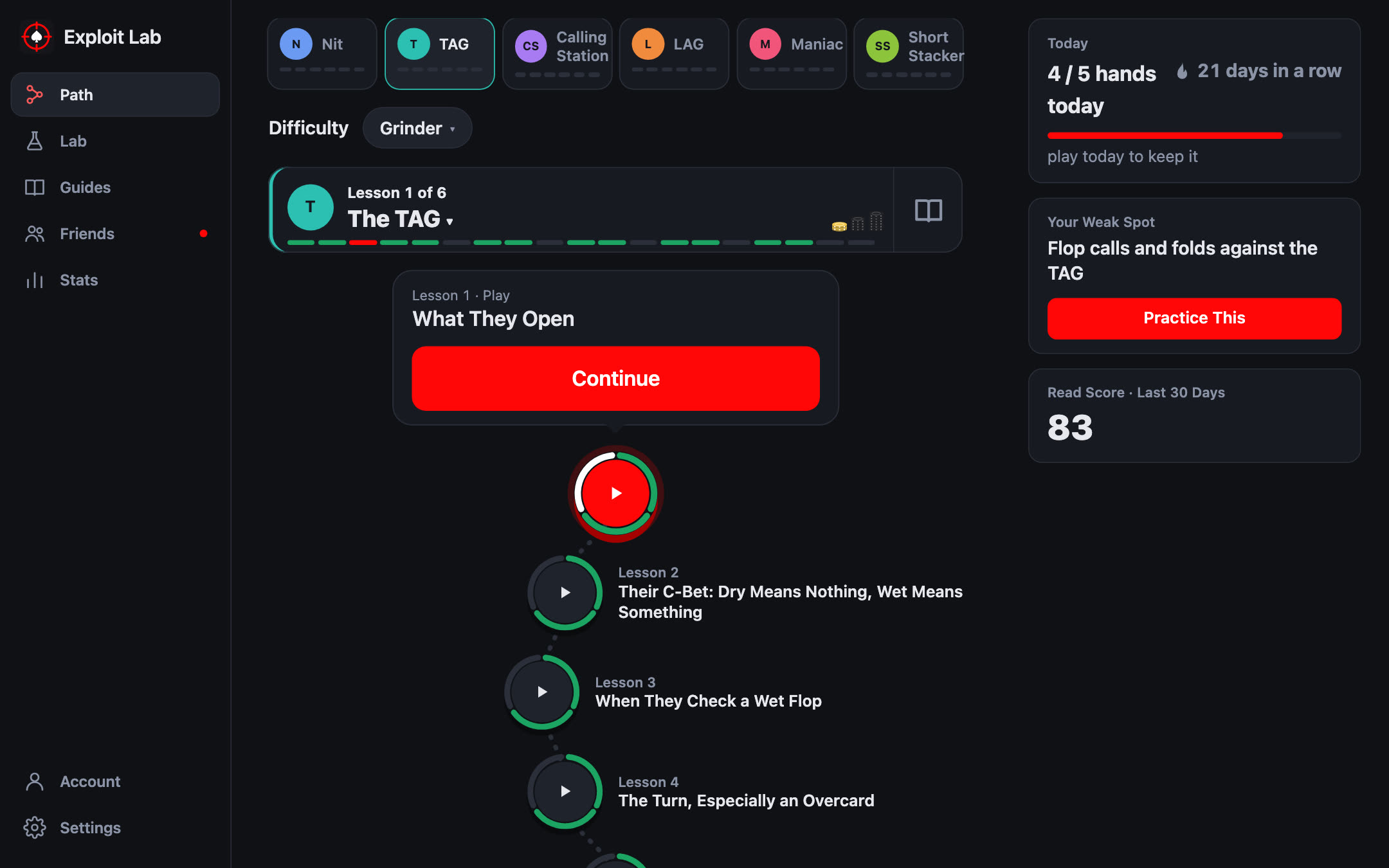
The Path on a laptop: the six villains along the top, the TAG's six lessons on a trail from What They Open to The River, then a Final Test, with today's hands and the read score beside them.

Beginner

See how their range splits and name each part. No clock, and a reveal after every street.

Grinder

Pick what their range is mostly made of, on a 30-second clock, with your equity against it shown.

Pro

Count their combos of each hand type on a shrinking clock, with pot odds and EV, and the truth only at the end.

The Lab

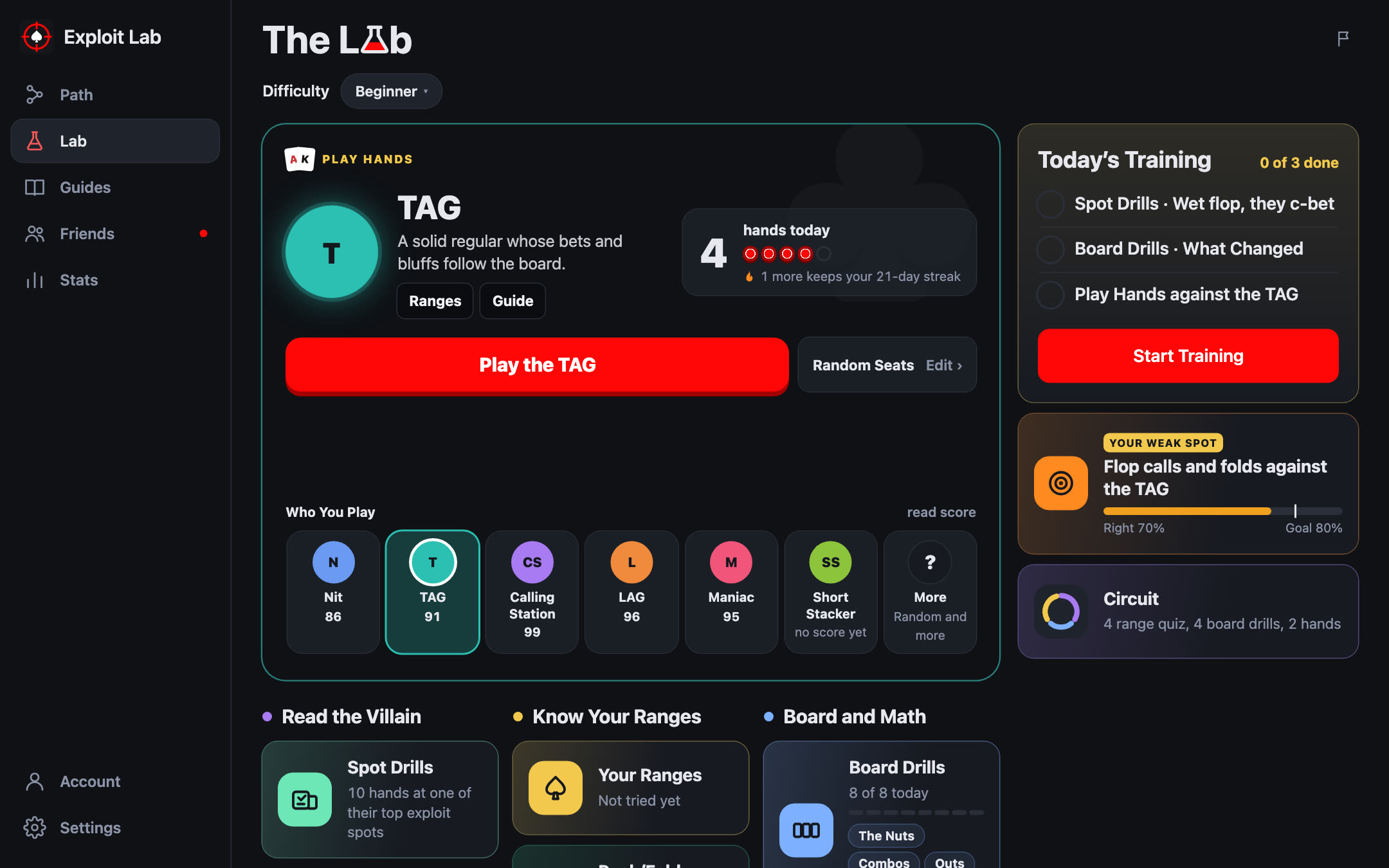
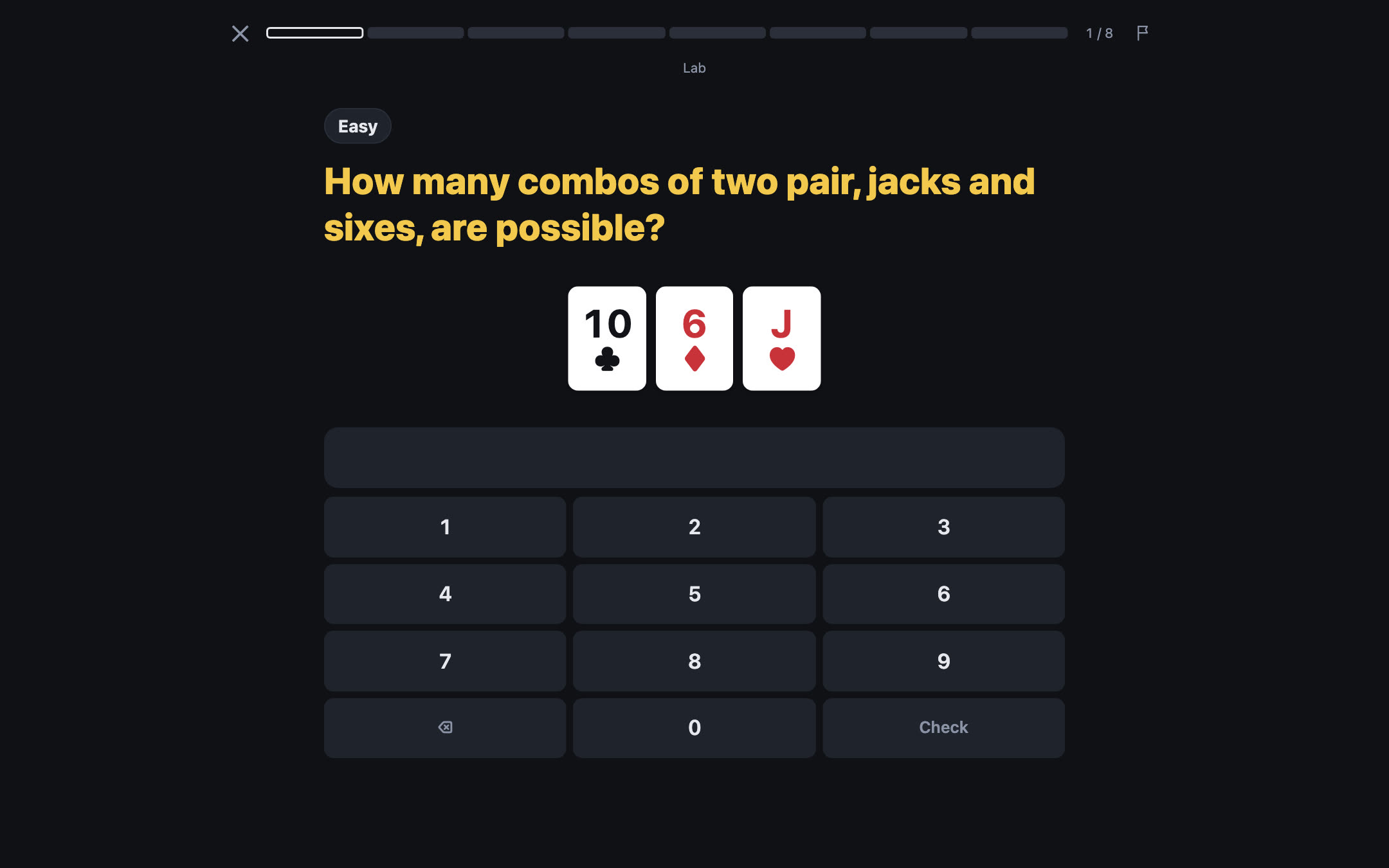
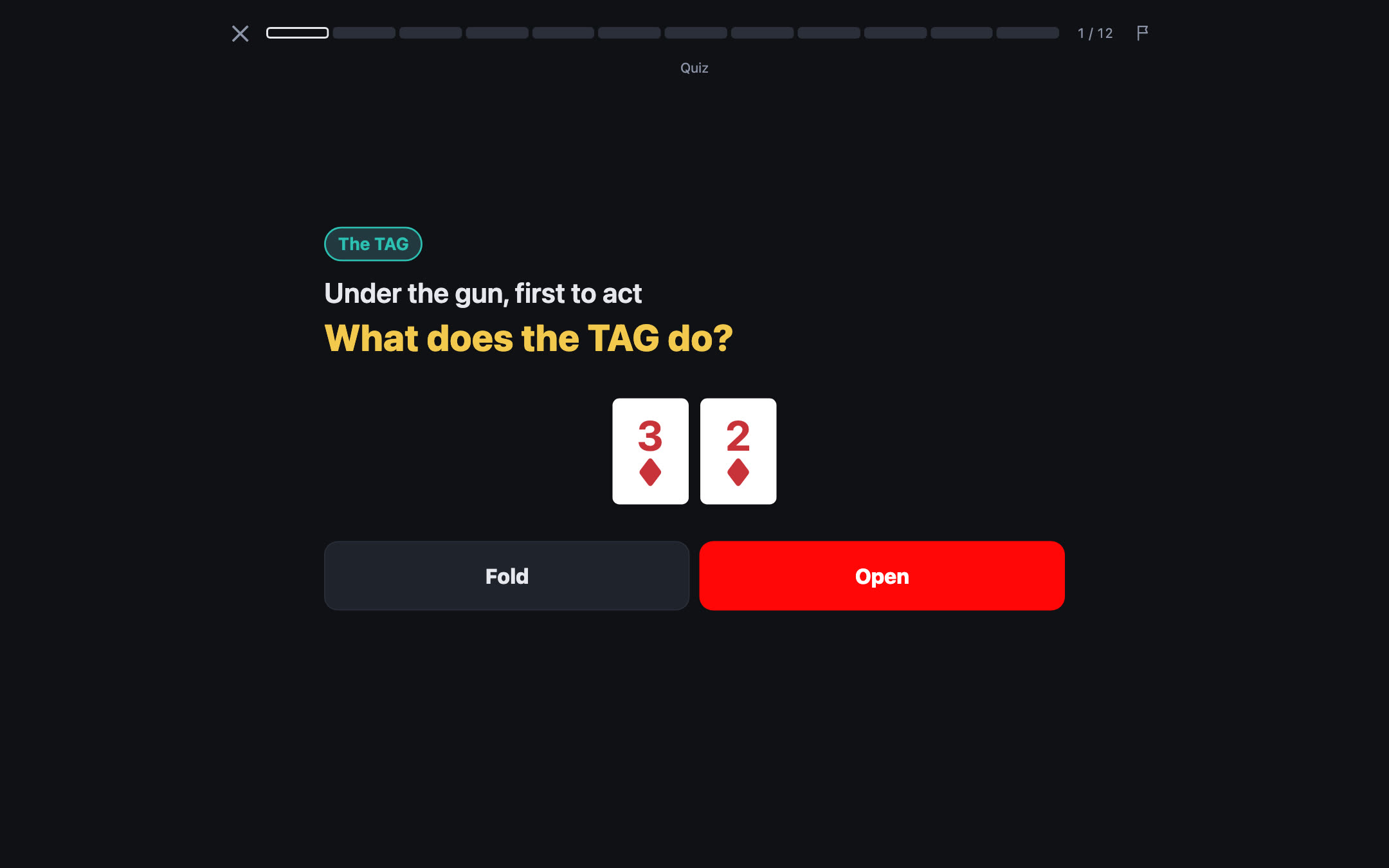
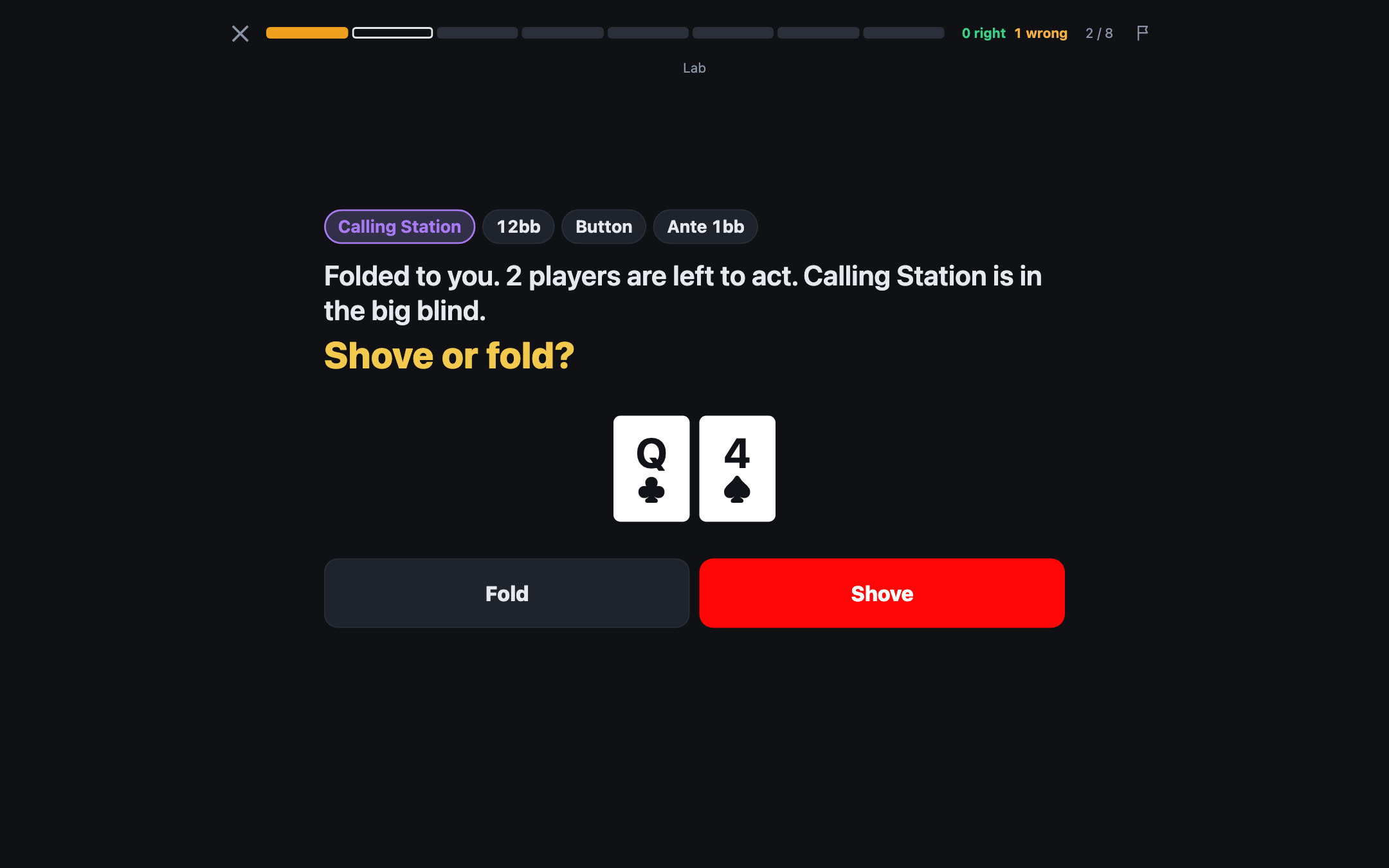
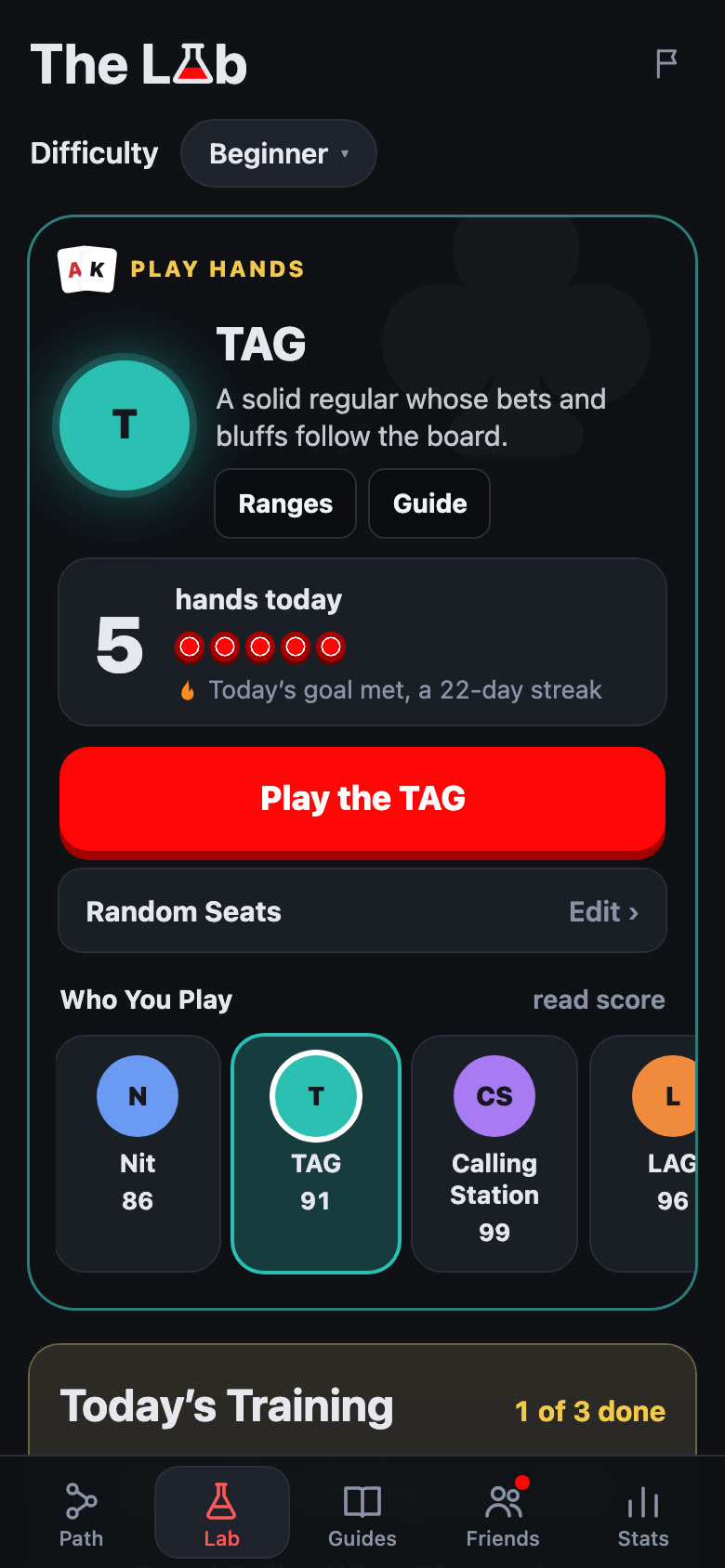
A few minutes a day, wherever you are. Board drills on the nuts, combos, outs and the price to call, a range quiz on what each villain does, push/fold for tournaments, and the Circuit when you only have five minutes.

Watch Yourself Improve

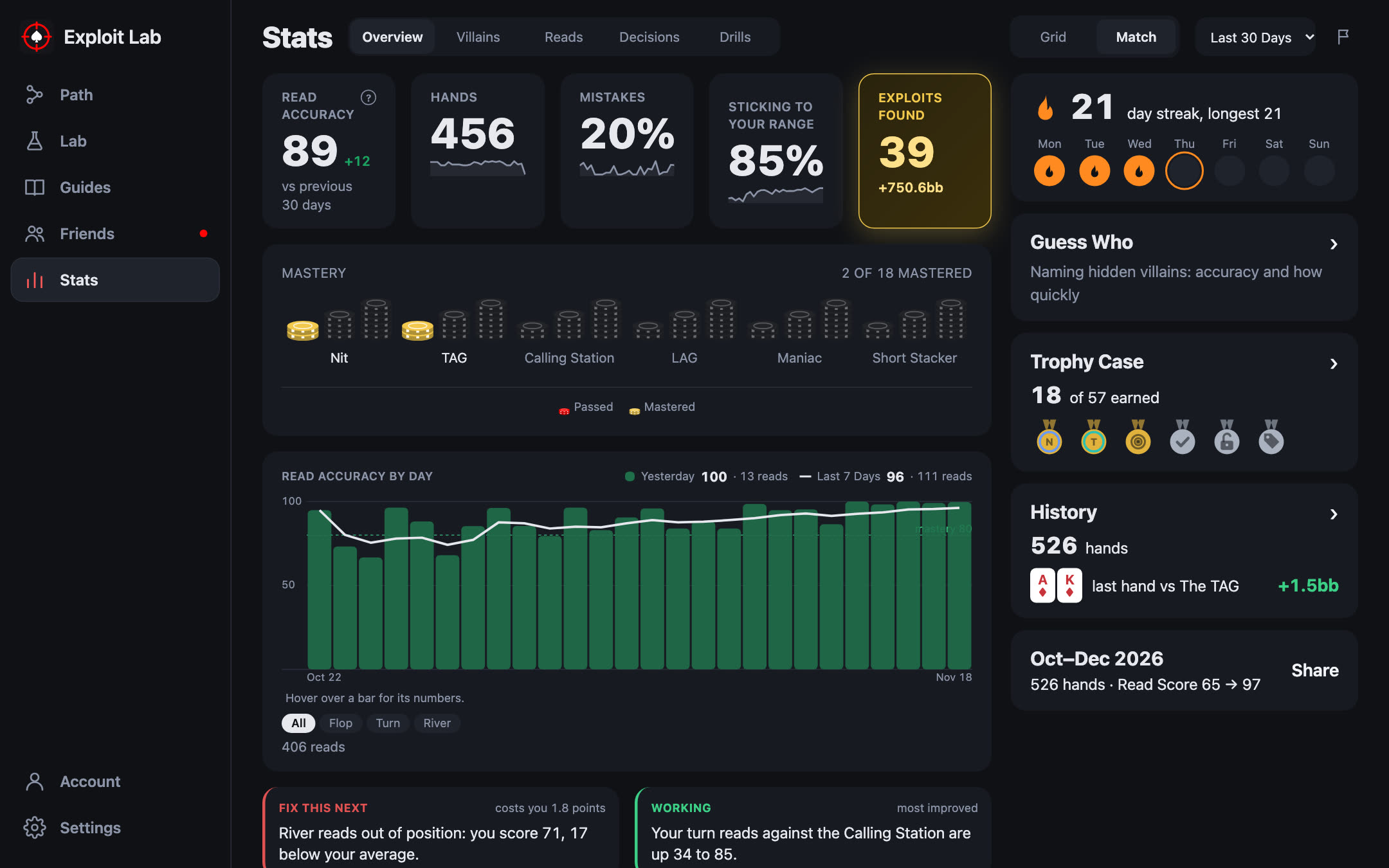
Every read and every call is scored against the truth, so your stats show exactly where you're getting better, and the one thing to fix next.

Fix This Next

Your costliest leak, with a button to practice it.

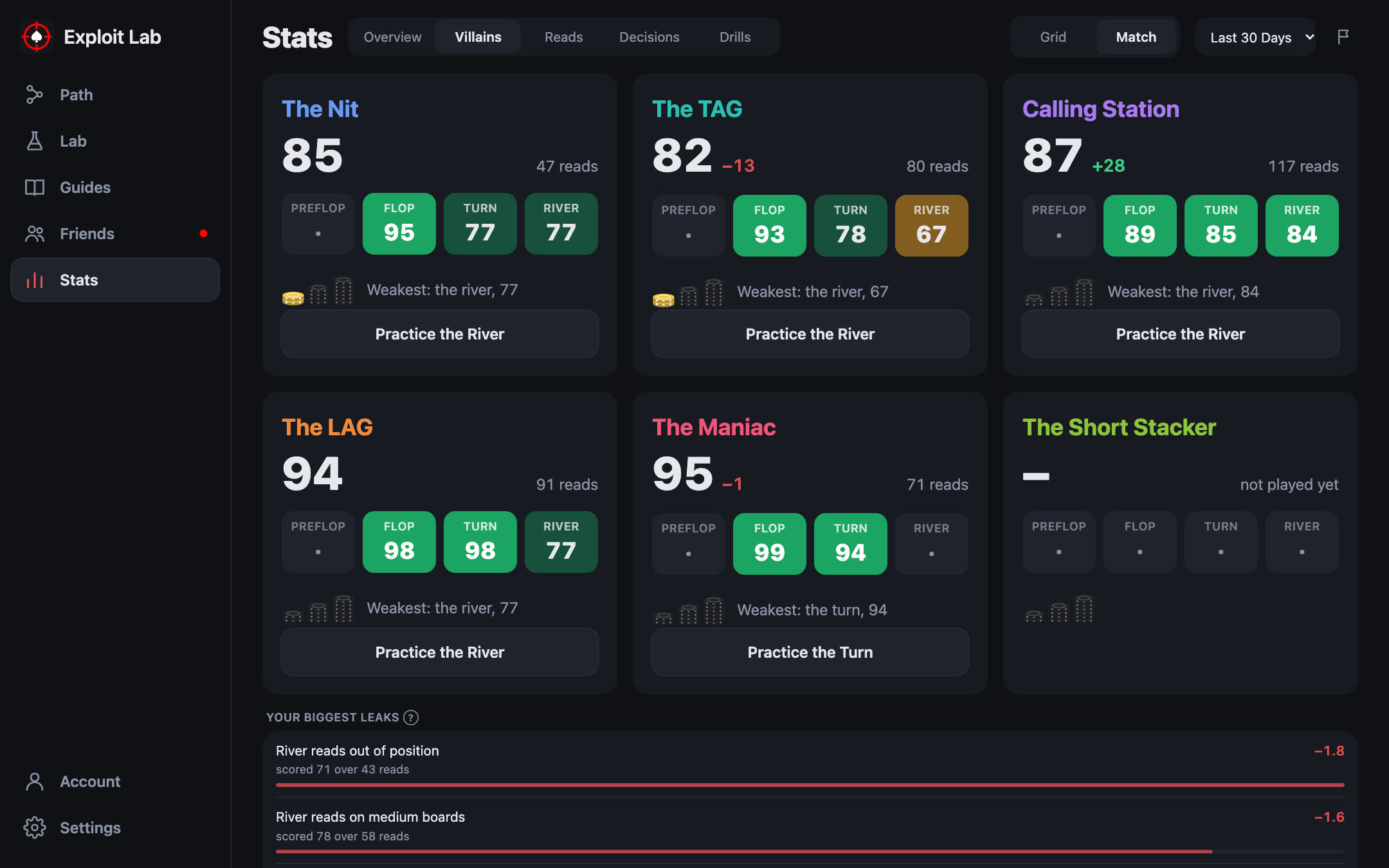
By Villain and Street

A weak turn against the LAG jumps out.

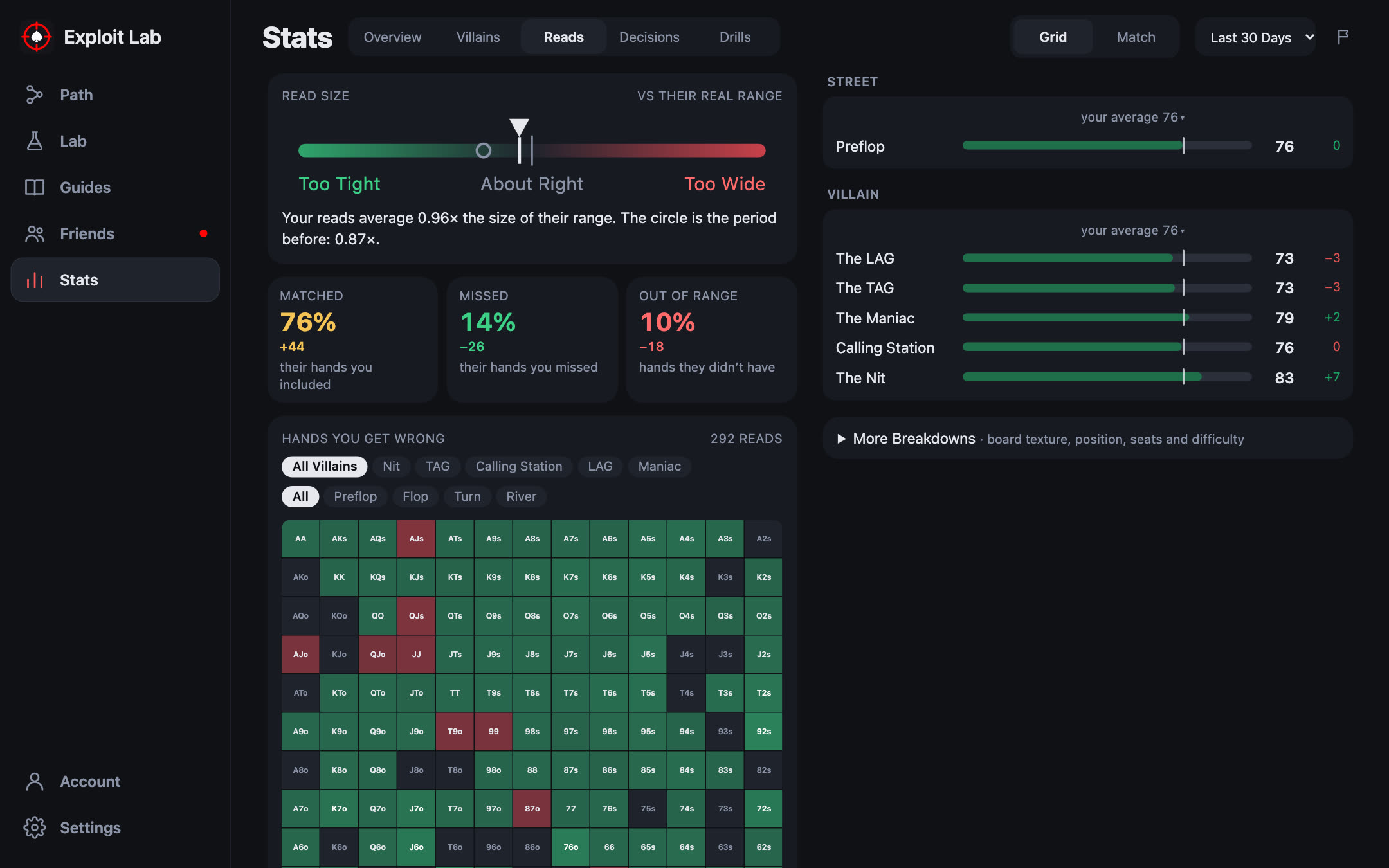
Too Wide or Too Tight?

Whether you paint ranges too big or too small, and how that's changed.

Six Villains You'll Meet at the Tables

Every read starts from their real preflop range, from every seat, and narrows with every bet, check and call.

Read the guide: How a range is built ›

Why Not Just Study GTO?

GTO is built to break even against a perfect opponent. The players at your table aren't perfect, and their habits are where the money is.

No Wall of Numbers

Solver output is abstract and hard to carry to the table. Here every lesson is one player, one habit and the play that beats it.

Built for Your Games

From your local card room to most online games, players repeat the same mistakes. Spotting them and punishing them is where your profit comes from.

The Groundwork for GTO

Solvers think in ranges. Once you can narrow a range street by street, solver study starts to make sense, and the reads keep paying when you get there.

Read the guide: Exploitative play ›

An Exact Engine, Not a Guess

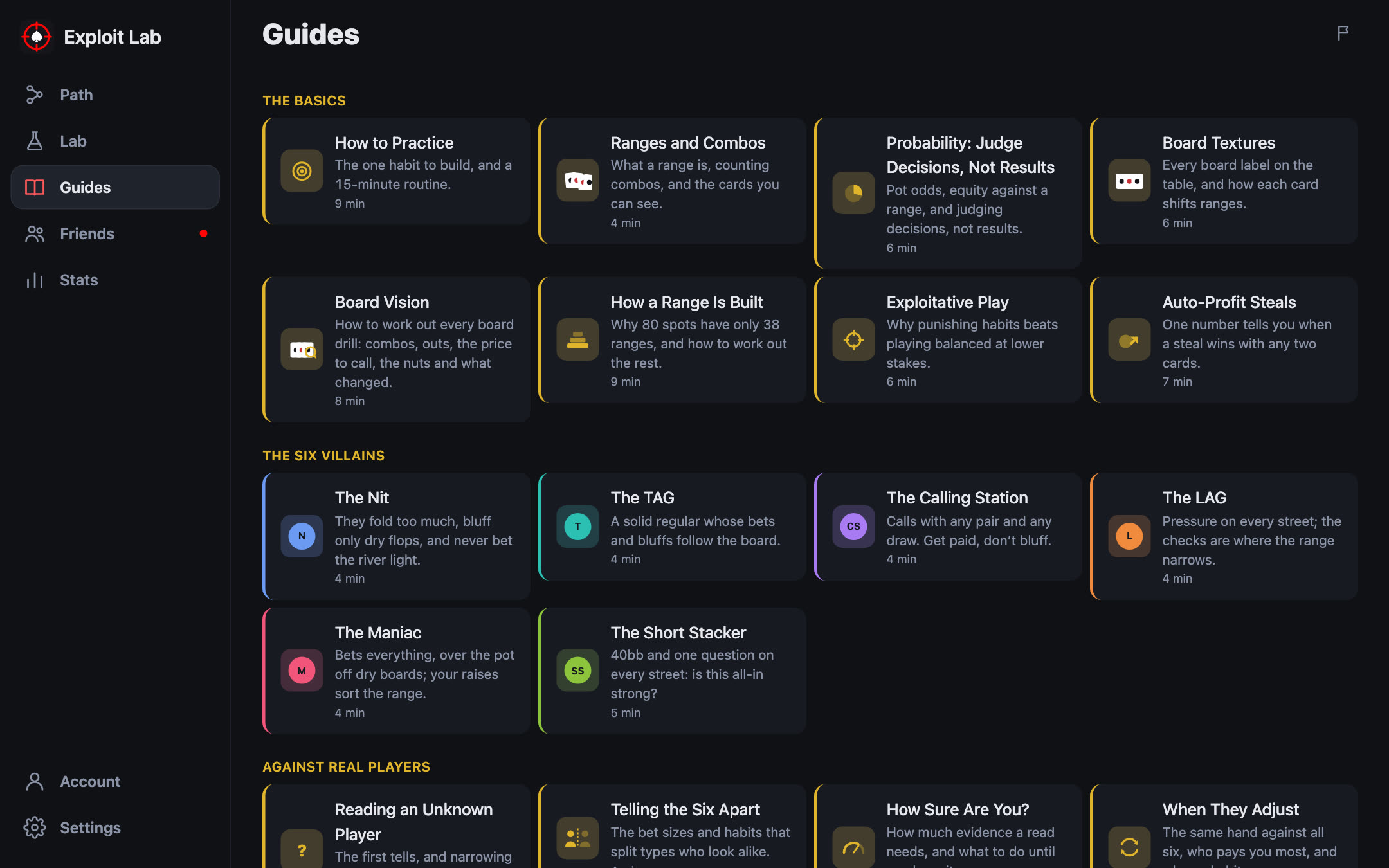
Guides

Short reads on ranges, board textures, pot odds and how to beat each player type, with every number worked out by the app. All free.

Guides on a laptop: The Basics, The Six Villains and Against Real Players, each guide with a line on what it covers and how long it takes.

Play with Friends

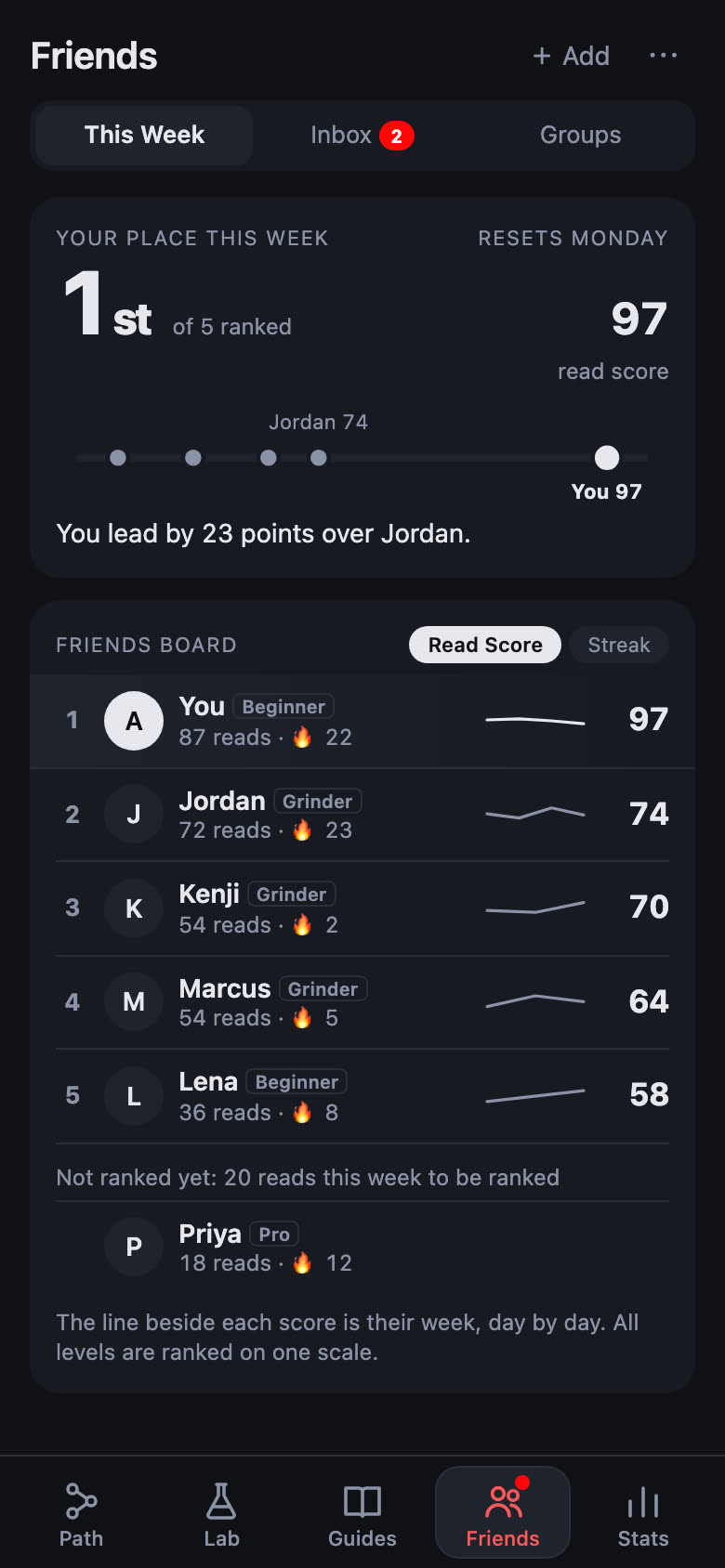
Scores are objective, so comparing them is fair. No luck, no bad beats, just who reads better.

Friends

Add friends with a link or QR code and see each other's week. Your hands and leaks stay yours.

Groups

Up to 100 players, a weekly race where each day counts.

Friends this week on a phone: you're 1st of 5 with a read score of 97, 23 points ahead of Jordan, and the friends board ranked by read score.

Questions

What Should I Study First?

Open the app and tap Continue. The path starts with the Nit, the easiest to read, and teaches the spots where they give away the most, then opens the next villain.

Read more in How to Practice ›

Do Real Players Play Like These Villains?

No real player plays exact ranges, and you don't need their exact range. Most sit close to one of these six types, a few hands off at the edges.

A read that's close and catches their habit points you to the same call or fold as a perfect one, and that's where the money is.

Read more in Probability ›

How Should I Practice?

Like training a muscle. Each hand is a rep and each drill set is a set, and the strength comes from showing up most days, not from one long session.

Ten hands and a set of board drills a day also build the focus you need late in a real session. Before every read, picture their range in your head first, then paint it.

Read more in How to Practice ›

What If I Keep Getting It Wrong?

Good. If every read were right, you wouldn't be learning anything. Each miss shows you a part of their range you didn't expect, and that's the part to remember.

Look for the pattern, too tight or too wide, and play the next one.

Read more in How to Practice ›

Why Picture Their Range Before I Paint It?

At a real table there's no grid. Before you tap Make Your Read, say their range to yourself. What did they start with, what does this action keep, what does it throw away?

Then paint it and see how close your picture was.

Read more in How to Practice ›

What If Poker Math Is Too Hard?

It's easier than it looks. The same few bet sizes and draws come up again and again, so most spots come down to a handful of numbers you can memorize.

Drill them for a few weeks and they're just there when you need them, with nothing to work out at the table.

Read more in Board Vision ›

Why Not Just Study a Solver?

A solver shows you how to play so a perfect opponent can't beat you by much. The players at your table aren't perfect, and their habits are where the money is.

This app trains the other half, reading what a player actually holds and punishing their habit. Balanced play is your defense, and exploits are your offense.

Read more in Exploitative Play ›

What If I Don't Have Time?

Fifteen minutes is enough. A set of board drills takes about 3 minutes and ten hands about 10.

A short session most days beats a long one once a week, because the habit comes from repeating it.

Read more in How to Practice ›

Will This Work in My Games?

It's built for the games where most players have bad habits, which is most low and middle stakes, live and online. Players there rarely adjust, so a read on their type keeps paying.

Higher up, players adjust more, but reading a range is still the skill underneath every decision.

Read more in Exploitative Play ›

Why Only Six Villains?

Six types cover most of the players you'll sit with, from the ones who fold too much to the ones who can't stop betting. Knowing six well beats knowing sixty vaguely.

Once they're automatic, a new opponent is one of them plus or minus a few hands, and Guess Who trains you to spot which.

Read more in Reading an Unknown Player ›

Why Did I Lose When I Played It Right?

That happens, and it isn't a mistake. A good call can lose and a bad one can win.

Over hundreds of hands the good decisions add up and the luck evens out, so the app grades your decisions, not the pots you won.

Read more in Probability ›
Make It Second Nature.

Leave your email and we'll send your invite right away. It's free during the beta.

How did you hear about us? (optional)